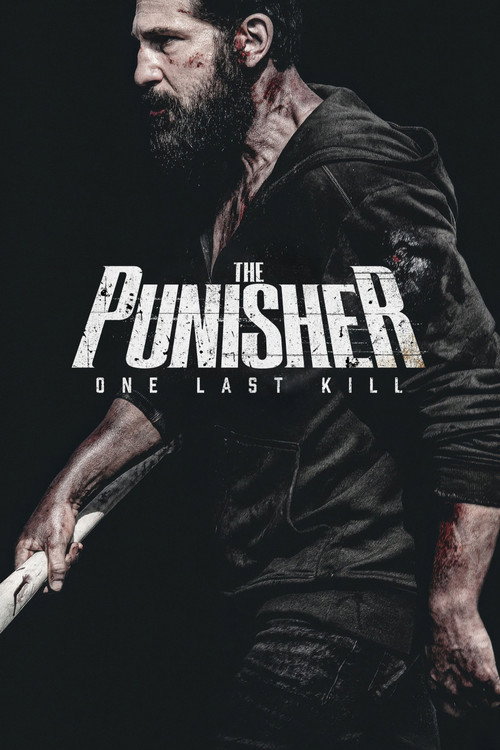
The Punisher: One Last Kill is a Focused, Brutal Character Study
The Punisher: One Last Kill (2026) is a lean, 51-minute exploration of Frank Castle’s internal decay that succeeds as a gritty drama by prioritizing psychological weight over explosive spectacle. It is a mandatory watch for those who prefer character-driven crime narratives, even though casual action fans may find the deliberate pacing surprisingly restrained.
A Fragile Equilibrium
The film opens with Frank Castle attempting to navigate a life defined by the absence of his family, utilizing hallucinations of Maria Castle to externalize his PTSD. This creative choice by Reinaldo Marcus Green and Jon Bernthal moves the narrative away from standard vigilante tropes and into the territory of a haunting, grief-stricken character study. The tension arises not from the threat of external violence, but from Frank’s desperate struggle to maintain his tenuous grip on reality.
While the focus on internal conflict is refreshing, the short runtime occasionally leaves the supporting characters feeling like mere conduits for Frank’s progression. Deborah Ann Woll’s Karen Page and Jason R. Moore’s Curtis Hoyle provide necessary emotional anchors, yet their interactions with Frank feel truncated, serving only to highlight his isolation rather than developing their own arcs. It is a bold decision to keep the scope this narrow, but it leaves the audience wanting more depth regarding how the world outside Frank’s trauma continues to function.
The Technical Execution
Robert Elswit’s cinematography captures the decay of Frank’s environment with a cold, unforgiving lens that perfectly complements the film’s somber tone. The visuals rely on stark shadows and tight framing, which makes the rare, sudden bursts of violence feel jarring and impactful rather than stylized or gratuitous. Kris Bowers’ score works in tandem with these visuals, eschewing traditional action motifs for a low, pulsing drone that emphasizes the persistent nature of Frank’s psychological burden.
However, the film’s reliance on hallucinations as a primary storytelling device can feel repetitive by the final act. While these sequences are vital to understanding Frank’s mental state, they occasionally stall the forward momentum of the plot just as the stakes begin to rise. The transition between Frank’s internal world and the external threat of the “unexpected force” mentioned in the premise is handled with a heavy hand, potentially alienating viewers who prefer a more grounded, linear progression of events.
Who Should Engage with the Violence
This film is tailor-made for viewers who appreciate the darker, more introspective side of comic-based crime dramas where the anti-hero is stripped of his armor. If you are looking for a high-octane, one-man-army spectacle that spans hours of urban warfare, you will likely find the pacing too meditative and the narrative scope too claustrophobic. It demands an audience willing to sit with the discomfort of a broken man rather than one looking for a cathartic, triumphant resolution.
Ultimately, the film succeeds because it dares to be small in a landscape that usually demands excess. By focusing on the cost of revenge rather than the efficacy of it, the production creates a lingering sense of unease that is far more effective than any typical shootout could provide. It is a sharp, uncompromising look at a man who has lost his purpose, and it delivers as a reminder that sometimes the most dangerous weapon in a crime drama is the protagonist’s own fractured mind.