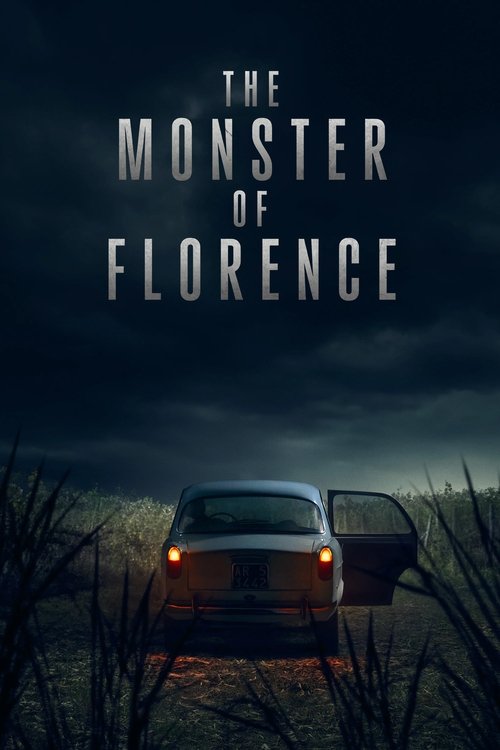
The Monster of Florence (2025): A Grim, Meticulous Procedural
The Monster of Florence is a compelling, if occasionally uneven, crime drama that effectively captures the suffocating dread of a community under siege. While it struggles with pacing during its mid-series shift between decades, its atmospheric tension and commitment to historical grit make it a worthwhile watch for those who prefer cerebral mysteries over frantic action.
Atmosphere and Historical Weight
The series succeeds by grounding its mystery in the specific, claustrophobic reality of 1960s and 1980s Italy. By weaving together the initial 1968 crimes involving characters like Barbara Locci and Salvatore Vinci with the later terror, the show creates a sense of cyclical violence that feels genuinely haunting. The production design avoids flashy period tropes, opting instead for a muted, dusty visual palette that emphasizes the isolation of the rural settings where the killer strikes.
Where the show occasionally falters is in its reliance on a fragmented narrative structure that can make the transition between time periods feel jarring. While the intent is clearly to demonstrate how the past informs the present, the constant jumping can dilute the emotional stakes for the characters caught in the 1980s timeline. A more linear approach might have allowed the audience to better empathize with the investigators, who are often reduced to cogs in a bureaucratic machine rather than fully realized human beings.
Performances and Character Depth
The performances, particularly by Marco Bullitta as Stefano Mele and Francesca Olia as Barbara Locci, provide a necessary human anchor to the grim subject matter. Bullitta brings a weary, fractured quality to his role that elevates the material beyond a standard procedural, suggesting a man burdened by secrets that go beyond the central investigation. His interactions with Giacomo Fadda’s Francesco Vinci serve as the series’ strongest moments, highlighting the complex web of suspicion that defined the era.
Conversely, some of the supporting roles feel underwritten, serving primarily as plot devices to move the mystery forward rather than distinct individuals. Liliana Bottone, as Silvia Della Monica, is given limited room to operate, which is a disappointment given the gravity of the events surrounding her character. Viewers seeking deep, character-driven studies may find the series somewhat cold, while those who enjoy an ensemble-heavy, plot-focused thriller will likely find the technical execution satisfying.
Target Audience and Verdict
This miniseries is an ideal choice for fans of dark, slow-burn crime dramas who appreciate historical context and a focus on investigative procedure. If you are looking for a fast-paced thriller that resolves every question with a tidy bow, you should skip this; the show is far more interested in the lingering, unresolved nature of trauma than in providing easy answers. It demands patience and an interest in the bureaucratic failures that often allow such horrors to persist.
Ultimately, the show is a solid entry in the true-crime drama space, successfully balancing its dual timelines through sheer force of atmosphere. It is not without its narrative frustrations, but the commitment to the bleak tone creates an experience that lingers. It is a worthwhile investment of time for anyone fascinated by the intersection of systemic incompetence and individual obsession.
The Monster of Florence: Ending Explained
(Spoilers ahead) The conclusion of the series suggests that the true horror of the case lies not in the identity of a single individual, but in the institutional inability to reconcile the 1968 origins with the subsequent 1980s murders. By forcing the viewer to confront the connection between the earlier victims and the later killings, the narrative implies that the “Monster” is a byproduct of a society that buried the truth early on. The final revelations underscore a grim theme: when justice is compromised by secrecy and misdirection, the cycle of violence becomes self-sustaining and nearly impossible to break.