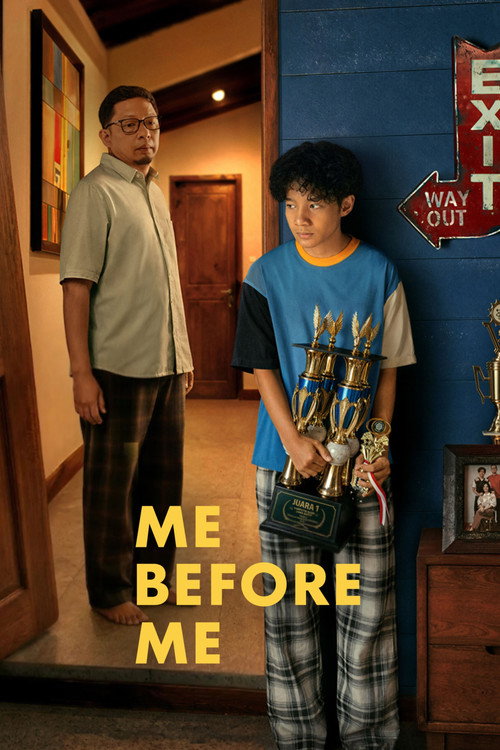
Me Before Me is a thoughtful, if uneven, meditation on paternal pressure
Jati, a father-bruised student, suffers under the expectant gaze of masculine social constructs. His personas, fathered promises, and shadow dreams reign supreme as Me Before Me (2026) rightfully draws focus toward character study. Intermittent predictability replaces the originality of emotional impact, but it offers a strong case study on how achieving objective mastery in academia can easily lead to a subjective lack of understanding of self.
The weight of the patriarchal shadow
Bima Sena delivers a strong performance for this movie, and shows the inner panic of a young figure who is stuck in this frightening cycle of performance. He has the most tense scenes in the movie with Ringgo Agus Rahman, who plays the character Jaya. In most of the scenes, the family dialogue shows a fake facade of family showing the real underlying feelings of raw, lingering sentiments of Jata.
The cinematography in the movie shot by Deska Binarso, captures the world of Jati in a claustrophobic manner, and uses a lot of close ups, to capture the emotions of the actors during their outbursts. This helps the audience understand the feeling of the family relationship, and helps the audience process and understand the emotions of the family conflict.
Structural hurdles in the narrative arc
The plot’s unevenness becomes most apparent when the middle act tempests the school project plot point. Even though Jati’s liberation is the end goal for the project within the screenplay, the forced mechanics of the device take away from the natural character interjections. It is actually the narrative device reliance of the genre that takes away from the emotional verisimilitude created in the first act. The supporting actors Widuri Puteri and Aming bring dimension to Jati’s world, but the so called character archetypes sometimes do. Even though the Aming’s character Mr. Juned/Mr. Zai has a tonal shift, the duality of the character isn’t adequately fleshed out. The narrative succeeds best through a thorough employment of character pain instead of serving up a poorly executed plot maneuver.
A recommendation for the introspective viewer
Those viewers who appreciate more methodical drama styles that focus on interior characters will likely engage with this one. This would benefit those interested in the subtler forms of intergenerational trauma and the personal costs of scholarly obligations.
However, for viewers who may be more impatient or prefer a more traditional story and resolution, the runtime at 127 minutes may likely feel long. The film requires a considerable amount of audience investment and an interest in the little details of social order, which would frustrate those seeking more conventional and plot oriented films.