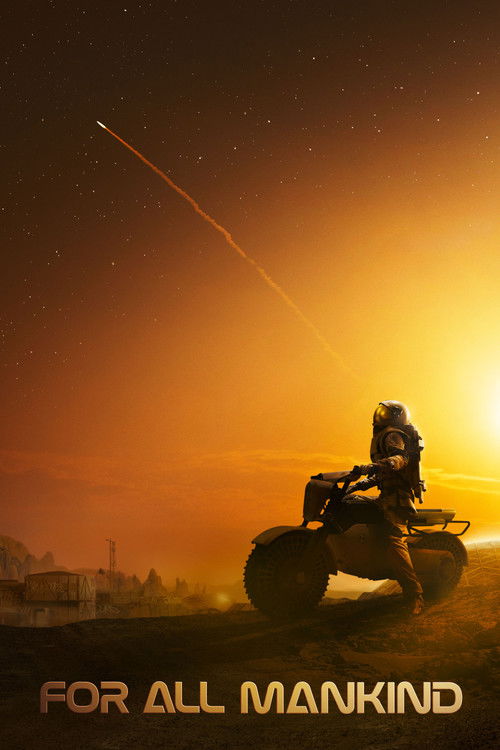
For All Mankind (2019) is a Rewarding Study of Escalating Ambition
For All Mankind is a rewarding experience for viewers who prefer patient, character-driven narratives over rapid-fire spectacle. It succeeds as a thoughtful exploration of how shifting geopolitical priorities redefine both global history and the domestic lives of the people tasked with pushing humanity into the unknown.
A Revisionist History of NASA
The series excels by grounding its high-stakes premise in the granular details of the 1970s, effectively capturing the tension of a Cold War that never cooled down. By keeping the focus on NASA’s internal culture and the personal sacrifices of its staff, the show avoids the trap of becoming a sterile science fiction exercise, instead prioritizing the human cost of progress.
Where the show occasionally stumbles is in its pacing, as the desire to span decades often forces the narrative to rush through critical developmental arcs. While the production design is detailed, the sheer volume of political maneuvering can sometimes obscure the emotional stakes, leaving the audience to play catch-up with the evolving motivations of the ensemble cast.
Character Dynamics Beyond the Launchpad
The strength of the series lies in the performances from actors like Toby Kebbell and Cynthy Wu, who anchor the grand themes in relatable, individual struggles. Their portrayal of the psychological toll of space exploration—and the political pressure applied to those on the ground—provides a necessary counterweight to the technical jargon of the space program.
Mireille Enos and Edi Gathegi bring a gravitas to their roles that keeps the series from feeling like a standard historical drama. However, those expecting a focus on pure discovery might be disappointed by the heavy emphasis on the bureaucracy of war and politics, which often takes precedence over the awe of the moon and Mars missions.
The Weight of Technological Dystopia
The show’s most interesting choice is its commitment to a darker, more cynical outcome for the space race, effectively turning a dream of exploration into a tool for geopolitical dominance. Paul Doucette’s score reinforces this shift, moving from hopeful, sweeping melodies to something more discordant as the characters realize the moon and Mars are merely new theaters for old conflicts.
This series is ideal for fans of slow-burn political dramas who enjoy seeing how small changes in history can lead to a vastly different, more volatile reality. If you are looking for lighthearted adventure or traditional heroics, you should skip this; the show is far more interested in the messy, often unethical compromises required to maintain a permanent presence among the stars.