The Return of the King is a Satisfying Conclusion for Patient Viewers
The Return of the King (2003) is a rewarding conclusion for those who appreciate sprawling fantasy epics, though its deliberate pacing and immense runtime demand significant commitment. It succeeds as a grand resolution to the struggle against darkness, provided the viewer is prepared to embrace its earnest, traditional approach to heroism.
A Massive Scale That Occasionally Stumbles
The film excels at capturing the sheer scale of its central conflict, utilizing vast armies and sweeping landscapes to make the fate of the world feel genuinely precarious. Andrew Lesnie’s cinematography works in tandem with the production design to ground the magical elements in a tactile, gritty reality, ensuring that the spectacle never feels entirely detached from the characters.
However, the film’s reliance on massive battle sequences occasionally dilutes the emotional stakes of the individual journey. While the spectacle is technically impressive, the sheer volume of combat at times overshadows the quiet, desperate trek of Frodo and Sam, which remains the most compelling narrative thread. It is a common critique to praise the battle choreography, yet I find the film is actually at its weakest when it prioritizes these chaotic skirmishes over the internal, psychological toll of the Ring’s obsession.
Character Dynamics Under the Shadow of Mordor
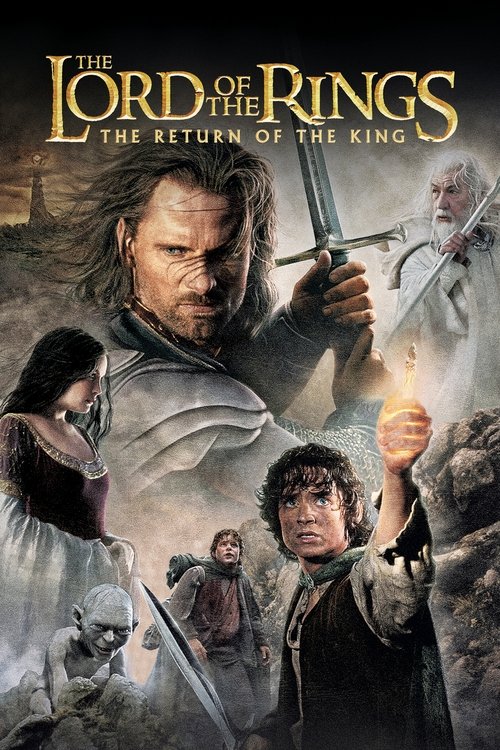
The core of this adventure is the fractured relationship between Frodo, Sam, and Gollum, which provides the necessary intimacy to balance the high-fantasy politics. Andy Serkis delivers a performance that feels vital, conveying a tragic, wretched obsession that serves as a dark mirror to the bravery displayed by the hobbits. Ian McKellen’s Gandalf and Viggo Mortensen’s Aragorn provide the necessary gravitas to anchor the larger kingdom-based stakes, making the shift toward a new era of men feel earned.
This film is best suited for those who have invested in the previous chapters and want to see the specific fates of these characters resolved with meticulous detail. If you are looking for a concise, fast-paced action film, you should skip this; its 201-minute duration is designed for a slow-burn experience that prioritizes thematic closure over brisk narrative momentum.
Howard Shore and the Weight of Myth
Howard Shore’s score acts as the connective tissue for the entire experience, swelling with themes that emphasize the ancient, fading magic of the elves and the rising strength of men. The music does not merely accompany the visuals; it carries the emotional weight of the narrative, signaling the gravity of each choice made by Aragorn or the encroaching despair felt by Frodo as they approach the heart of Mordor.
The film’s commitment to its own internal logic is what makes it hold up, regardless of how one feels about the fantasy genre. It treats its world with a level of seriousness that might feel heavy-handed to some, but it is this very dedication to the lore and the stakes that allows the final scenes to land with such impact. By the time the journey concludes, the audience has been through enough trials alongside the fellowship that the resolution feels like a personal victory.