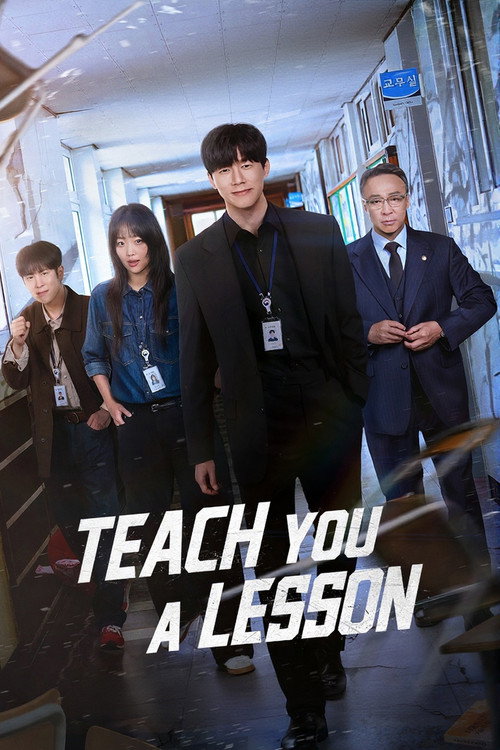
Teach You a Lesson (2026) is a Brutal but Uneven Social Satire
Teach You a Lesson is a polarizing experience that effectively balances high-octane physical confrontation with biting institutional critique, though it occasionally loses its way in its own moral ambiguity. While it succeeds as a visceral action-drama, viewers seeking a nuanced exploration of school reform may find its aggressive methodology more troubling than transformative.
The Ethics of Violent Intervention
The series thrives when it leans into the absurdity of its premise: a government-sanctioned enforcer, Na Hwa-jin, literally beating respect into a broken school system. Kim Moo-yul brings a chilling, stoic intensity to the role, making the physical intervention scenes feel less like standard action sequences and more like a desperate, flawed attempt to restore order. The cinematography by Yun Ju-hwan emphasizes the claustrophobic nature of these classrooms, turning the school setting into a battlefield where the stakes feel genuinely dangerous.
However, the show falters when it attempts to justify its protagonist’s extreme violence through heavy-handed social commentary. While the script by Lee Nam-kyu, Kim Da-hee, and Moon Jong-ho aims to tackle the systemic rot of bullying and political apathy, it often relies on caricatured villains to make its point. By positioning the minister and the administrative staff as cartoonishly corrupt, the show undermines the complex reality of educational reform, making the violent solutions feel like a cheap shortcut rather than a structural fix.
Performance Dynamics and Tonal Shifts
The chemistry between Kim Moo-yul and Lee Sung-min serves as the show’s emotional anchor, grounding the more fantastical elements of the plot. Lee Sung-min provides a necessary counterweight to the aggression on screen, offering a more calculated, political perspective that keeps the drama from descending into a pure vigilante narrative. Their interactions are the most compelling parts of the series, as they navigate the shifting loyalties within the Educational Rights Protection Bureau.
Conversely, the comedic beats involving Pyo Ji-hoon often feel jarring, creating a tonal whiplash that disrupts the gravity of the central conflict. These moments of levity are intended to break the tension, but they frequently clash with the grim reality of the subject matter, making the series feel like two different shows fighting for dominance. It is a bold stylistic choice, but one that ultimately prevents the narrative from achieving a consistent, coherent identity throughout its run.
A Polarizing Vision for Education
This series is a recommended watch for those who enjoy dark, high-stakes dramas that prioritize visceral action over subtle character development. If you are interested in an unflinching—albeit hyperbolic—look at institutional failure and the lengths to which individuals might go to correct it, the performances alone make this worth your time. The score by Kim Tae-seong elevates the tension, ensuring that every confrontation feels weighted with consequence.
Conversely, viewers who prefer grounded, realistic portrayals of social issues should skip this title. The show’s reliance on physical violence as a primary tool for reform is inherently divisive, and those who find the glorification of vigilante justice in a school setting distasteful will likely struggle with the premise. It is a loud, aggressive, and intentionally provocative piece of television that demands a thick skin and a high tolerance for moral ambiguity.