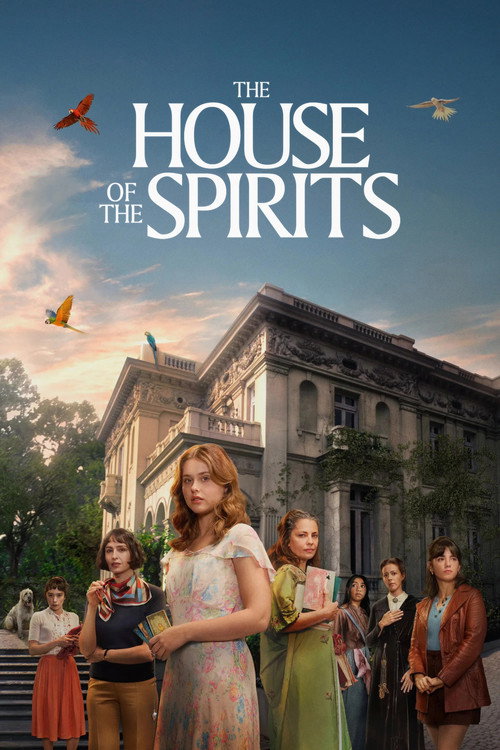
The House of the Spirits (2026) is a Dense, Multi-Generational Drama Worth Your Time
The House of the Spirits is a rewarding, albeit demanding, drama for movie fans who appreciate sprawling family sagas that balance intimate domestic secrets with the harsh realities of political upheaval. It succeeds by prioritizing the shifting dynamics of the Trueba lineage over mere historical reenactment, making it a compelling choice for those who favor character-driven storytelling.
A Balancing Act of Eras and Identity
The series excels in its portrayal of the generational divide, particularly through the dual casting of Clara del Valle. Both Dolores Fonzi and Nicole Wallace bring a necessary ethereal quality to the character, serving as the moral anchor against Alfonso Herrera’s increasingly volatile Esteban Trueba. The narrative structure manages to weave a century of social change into the family’s private sphere without losing the thread of individual motivations.
Where the show occasionally falters is in its pacing during the transition between the early, more romanticized family dynamics and the later, grittier scenes of revolution. While the shift in tone is necessary to reflect the changing environment, the sudden acceleration can make the supporting characters, such as Tío Marcos, feel underutilized. These moments of narrative whiplash are minor, yet they prevent the series from achieving a truly seamless flow across its expansive timeline.
Challenging the Tyrant Archetype
Alfonso Herrera delivers a performance that defies the typical villainous tropes often assigned to a patriarch of Esteban’s temperament. Instead of playing him as a one-dimensional figure of cruelty, he portrays Esteban with a pathetic, desperate pride that makes his eventual conflict with his granddaughter, Alba, feel deeply personal rather than merely political. This nuance is the primary reason the show avoids becoming a standard historical melodrama.
However, some viewers might find the heavy focus on the family’s internal secrets to be at odds with the broader, more violent social context of the later episodes. I argue that the show is at its strongest when it ignores the grand scale of the revolution to focus on the quiet, devastating betrayals within the Trueba household. By grounding the political crisis in the personal, the series creates a more resonant emotional impact than a purely historical account ever could.
Who Should Watch and Who Should Look Away
This series is an essential watch for those who enjoy literature-based dramas that require patience and an eye for detail. If you are drawn to stories about how family legacies are constructed and dismantled through secret loves and ideological rifts, the rich character work here will keep you engaged throughout the entire run.
On the contrary, viewers seeking a fast-paced thriller or a straightforward political commentary should likely look elsewhere. The show demands a slow-burn investment in the Trueba family’s complex history, and those who prefer quick resolutions or action-heavy sequences may find the introspective nature of the narrative frustrating. It is a show for the patient observer, not for those looking for immediate gratification.