
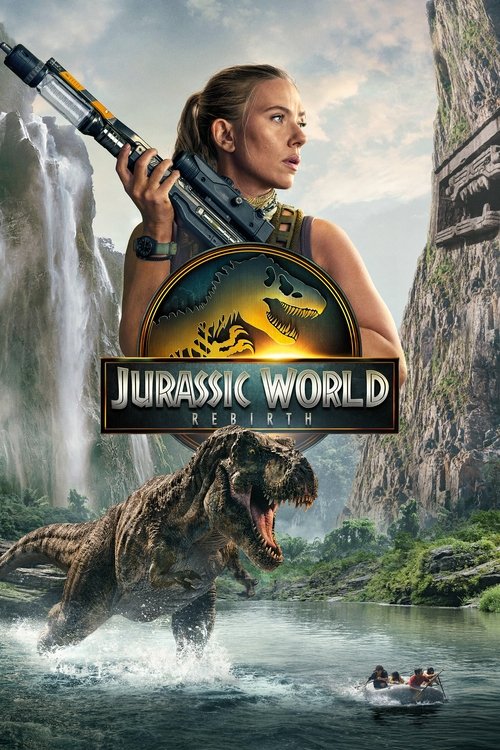
Jurassic World Rebirth is a Tense but Uneven Dinosaur Expedition
Jurassic World Rebirth is a serviceable action-adventure that succeeds when focusing on isolated survival, though it struggles to balance its bloated scope with the intimacy of its central characters. It is worth watching for fans of creature-feature spectacle, provided they are willing to overlook the derivative narrative beats that define this latest franchise entry.
Atmosphere and Visual Scale
Director Gareth Edwards brings a deliberate, grounded visual language to the film that distinguishes it from the frenetic pace of recent sequels. Cinematographer John Mathieson captures the island’s environment with a sense of scale, making the presence of the Tyrannosaurus Rex and Spinosaurus feel genuinely imposing rather than like digital window dressing. The Alexandre Desplat score reinforces this, opting for a brooding, orchestral tension that elevates the survival horror elements over the typical blockbuster bombast.
However, the film falters when the script forces the action into standard, predictable patterns. While the visual craft remains consistent, the narrative often feels like a checklist of requirements rather than a cohesive story. The decision to emphasize the sheer size of the prehistoric creatures is effective, however it occasionally stress the thinness of the human drama unfolding beneath their feet.
Character Dynamics and Performance
Scarlett Johansson anchors the film as Zora Bennett, bringing a necessary grit to a role that could have easily felt like a generic mercenary archetype. Her chemistry with Mahershala Ali’s Duncan Kincaid provides the film’s most compelling moments, grounding the high-stakes mission in a believable sense of professional camaraderie. Jonathan Bailey and Rupert Friend add color to the ensemble, though their characters often feel sidelined by the overwhelming focus on the dinosaur encounters.
The film is best suited for viewers who prioritize creature design and environmental tension over complex character arcs. Those looking for a deep, innovative exploration of the franchise’s science fiction roots will likely find the plot thin and overly reliant on established tropes. If you enjoy watching skilled professionals navigate a hostile, isolated environment while avoiding apex predators, this mission will satisfy; if you prefer tight, character-driven storytelling, you might find the 134-minute runtime a bit of a slog possibly.
The Weight of the Secret Mission
The core premise, centered on retrieving genetic material from three massive dinosaurs, works best as a catalyst for pure survival rather than a complex political thriller. By forcing Zora’s covert team to intersect with a stranded civilian family, the film creates a natural friction between cold, corporate objectives and human empathy. This clash is the most interesting aspect of the writing, forcing the protagonists to question the value of their mission when faced with immediate, visceral loss.
Despite this potential, the film misses an opportunity to fully explore the ethical implications of the genetic material they are hunting. The “sinister discovery” revealed on the island feels rushed, serving more as a plot device to facilitate a finale than a genuine thematic revelation. While the action sequences are technically proficient, the lack of a clear emotional stakes regarding the scientific fallout leaves the middle act feeling somewhat hollow.
Jurassic World Rebirth: Ending Explained
(Spoilers ahead) The conclusion of the film centers on the realization that the island was never merely a sanctuary, but a long-term laboratory for unethical genetic experimentation hidden from the public eye. When Zora and the survivors uncover the truth behind the secret mission, it becomes clear that the genetic material was intended to perpetuate the same cycle of exploitation that caused the initial collapse of the park. By choosing to abandon the mission and prioritize the safety of the civilian family, Zora effectively rejects the corporate greed that defined her career. The final confrontation serves as a symbolic break from this history, suggesting that the only way to survive the “new era” is to stop trying to control the prehistoric past entirely.






★★★★★great