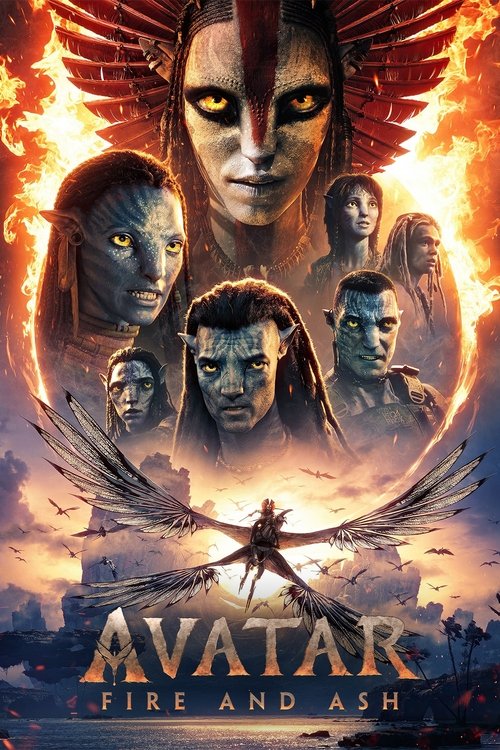
Avatar: Fire and Ash is a Visceral, Overlong Tribal Confrontation
Avatar: Fire and Ash (2025) is a technically staggering science fiction adventure that succeeds as a sensory experience while buckling under the weight of its own 198-minute runtime. It is worth watching for those who prioritize immersive world-building over narrative brevity, though the pacing issues make it a difficult recommendation for casual viewers.
A Shift in the Na’vi Power Dynamic
The introduction of the Ash People offers a necessary departure from the recurring conflict with the RDA. By centering the tension on Varang and her tribe, the narrative explores a more complex version of Pandora where the Na’vi are not a monolithic, peaceful entity. This friction forces Jake and Neytiri into a defensive position that feels earned, moving the focus away from human-versus-alien tropes toward an internal struggle for the planet’s soul.
However, the film occasionally stumbles when it attempts to juggle these new tribal politics alongside the persistent threat of Quaritch. The inclusion of the clone subplot feels increasingly crowded, as the script struggles to give equal weight to the Ash People’s brutality and the technological remnants of the previous war. While the visual spectacle remains unmatched, the sheer density of the plot sometimes obscures the emotional stakes of the Sully family’s grief.
The Weight of Transhumanism and Family
The film excels most when it leans into the concept of transhumanism through the character of Kiri. Her connection to the planet serves as a bridge between the biological and the synthetic, providing a fascinating counterpoint to the more violent aspirations of the Ash People. Russell Carpenter’s cinematography captures these moments of quiet exploration with a precision that makes the alien landscape feel both tangible and deeply spiritual.
Conversely, the reliance on constant combat to drive the narrative forward eventually leads to a sense of fatigue. For those who enjoyed the previous exploration of Pandora, this entry might feel too preoccupied with the mechanics of space war rather than the wonder of the environment. If you prefer grounded character studies over grand, sweeping conflicts, you will likely find the relentless pace of the third act exhausting rather than exhilarating.
Who Should Engage with the Ash People
Dedicated fans of the franchise who are invested in the evolution of the Sully family will find plenty to appreciate in the darker, more aggressive tone of this installment. The addition of Oona Chaplin as Varang brings a sharp, volatile energy that complicates the moral landscape of the series. If you value high-concept world-building and are willing to commit to a long theatrical experience, the film delivers a visceral, high-stakes expansion of the lore.
On the other hand, viewers who were already skeptical of the series’ length or its earnest emotional beats should skip this. The film makes no apologies for its duration or its melodramatic approach to family dynamics. If you require a tightly paced script or a minimalist approach to fantasy storytelling, the sheer scale and volume of this adventure will likely feel like an unnecessary sensory overload.
Avatar: Fire and Ash: Ending Explained
(Spoilers ahead) The conclusion of the confliction with the Ash People reveals a permanent loss of innocence for the Sully family, framing the war not as a victory, but as a tragic necessity for survival. By forcing Jake to confront a violent mirror of his own people in Varang, the film suggests that the future of Pandora is no longer defined by a simple struggle against human invaders, but by the moral rot that can take root within the Na’vi themselves.
The resolution serves as a grim acknowledgment of the cost of transhumanism and the cycle of vengeance that now threatens the planet. Kiri’s role at the end implies that the next phase of this war will be fought on a metaphysical level, moving away from physical weaponry toward a deeper, more dangerous manipulation of the planet’s consciousness. The world has changed forever because the survivors can no longer claim the moral high ground as easily as they once did.